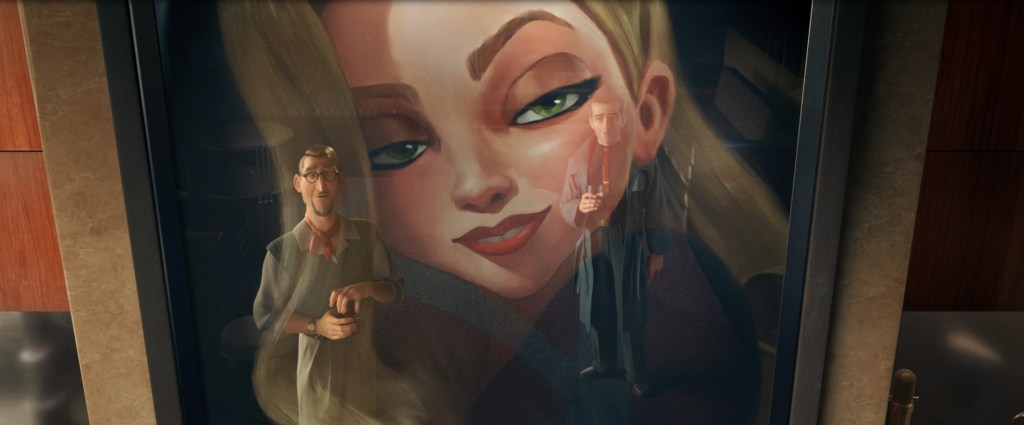
Netflix has spent the last several years quietly building one of the most interesting animation slates in the industry—and almost nobody talks about it. Brad Bird’s Ray Gunn, a noir detective story set in a retro-futuristic alien underworld, might be the project that changes that. Not because it’s designed to dominate the cultural conversation, but because it’s designed to deserve one.
Netflix Animation Has a Quiet Pattern Worth Noticing
Netflix’s animation strategy doesn’t generate the breathless coverage that Disney and Pixar command, but it’s been producing something more interesting than volume: range.
Guillermo del Toro’s Pinocchio won the Academy Award for Best Animated Feature—not by out-Disneying Disney, but by being something Disney would never make: a stop-motion meditation on mortality, fascism, and fatherhood. It was uncompromising and idiosyncratic, and Netflix backed it anyway.
Then there’s KPop Demon Hunters, which didn’t chase mainstream ubiquity. It targeted a specific audience with a specific visual language and leaned into that identity hard. The strategy wasn’t “appeal to everyone.” It was “matter deeply to someone.”
That’s the throughline. Netflix isn’t trying to build an animation studio that competes with Pixar on Pixar’s terms. They’re building a roster of creator-driven projects that would struggle to exist anywhere else. Ray Gunn—a noir detective story set in a retro-futuristic alien underworld, directed by a filmmaker who’s been developing it for over a decade—fits that model like a glove.
Brad Bird and the Long Game
Directors get attached to animated projects all the time. What makes Brad Bird different isn’t his résumé—though The Incredibles and Ratatouille certainly don’t hurt. It’s the specific kind of filmmaker he is.
The Iron Giant is the Rosetta Stone here. When it released in 1999, it underperformed commercially. Warner Bros. barely marketed it. By any industry metric, it was a failure. And yet it endured. It became one of the most referenced, most beloved animated films of its generation—not because of spectacle or franchise potential, but because of the emotional specificity Bird brought to its characters and its themes.
That trajectory matters when evaluating Ray Gunn, because Bird has never been a trend-chaser. He makes films that are tonally precise and emotionally patient, and those qualities tend to compound over time rather than spike on opening weekend. In a theatrical model, that’s a liability. In a streaming model—where a film can be discovered, shared, and rediscovered indefinitely—it’s an asset.
The Genre Nobody’s Serving
Here’s what makes Ray Gunn genuinely unusual in the current animation landscape: it’s not for kids, and it’s not pretending to be.
The vast majority of high-profile animated features are still built on the same basic calculus—family-friendly, emotionally uplifting, broad enough to sell toys and theme park rides. Even the “edgier” entries tend to pull their punches. Ray Gunndoesn’t appear to be interested in any of that.
A noir detective story with murder, mystery, and aliens. A visual palette that owes more to The Maltese Falcon and Blade Runner than to anything in the current animated canon. This is the kind of genre territory that adult audiences have been hungry for in animation—the same appetite that made Arcane explode and that keeps Cowboy Bebop (the anime, not the live-action adaptation) on recommendation lists decades after its release.
Netflix knows this gap exists. They’ve been circling it for years. Ray Gunn is the clearest swing they’ve taken at filling it.
Visual Identity as Currency
In the streaming era, the most important thing an animated project can have isn’t a famous voice cast or a massive marketing budget. It’s a frame you can recognize out of context.
Arcane understood this. Spider-Verse understood this. The reason those projects broke through isn’t just that they told good stories—it’s that they looked like nothing else. Every frame was a potential screenshot, a potential wallpaper, a potential social media post. Visual identity became its own marketing engine.
From what’s been shown so far, Ray Gunn is built with that same instinct. Towering holograms cutting through smoky cityscapes. Hard shadows and stark silhouettes. A 1930s noir aesthetic colliding with alien technology. It has the kind of visual confidence that makes people stop scrolling and ask, “What is that?”
That quality is rare, and it’s increasingly the thing that separates animated projects that break out from ones that disappear into the catalog.
The Cast Is Doing Something Smart
Voice casting in animation usually follows one of two playbooks: stack it with A-listers for the trailer, or cast character actors for authenticity. Ray Gunn appears to be doing both at once, and the combination is more interesting than either approach alone.
Sam Rockwell brings the kind of off-kilter energy that keeps a protagonist unpredictable. Scarlett Johansson provides immediate recognition and gravity. And Tom Waits—just by showing up—adds a layer of grit and texture that signals this isn’t a sanitized, studio-noted production. It’s a cast that says: this film has a personality, and we’re not going to sand it down.
The Streaming Model Rewards Exactly This Kind of Film
The economics of theatrical animation are brutal for anything that isn’t a guaranteed hit. A film like Ray Gunn—niche genre, adult-skewing, no existing IP—would be a terrifying theatrical bet. The marketing spend alone would need to be enormous just to explain what it is.
But streaming inverts that equation. On Netflix, Ray Gunn doesn’t need a massive opening weekend. It needs word of mouth. It needs the Friday-night discovery, the “you have to watch this” text, the slow accumulation of an audience that finds it on their own terms.
That’s exactly how Pinocchio built its audience. That’s how Klaus became a perennial holiday favorite. The streaming model is structurally designed to reward the kind of film Ray Gunn appears to be: distinctive, rewatchable, and built to find its people over time rather than all at once.
Cult Classic DNA in a Streaming World
Everything about Ray Gunn‘s pedigree points toward cult classic status: a passion project that spent years in development, a genre mashup that isn’t responding to any current trend, a director whose best work is defined by emotional resonance rather than commercial calculation.
The difference is that in the streaming era, “cult classic” doesn’t mean waiting fifteen years for critical reappraisal. It means a concentrated burst of discovery—algorithmic recommendations feeding organic conversation feeding social media visibility. A film can go from obscurity to beloved in weeks rather than decades.
Ray Gunn has the ingredients for that kind of trajectory. Whether it actually achieves it will depend on execution—on whether the script matches the visual ambition, whether the tone holds across the runtime, whether Bird can deliver on the emotional specificity that defines his best work.
The Real Bet
Ray Gunn isn’t trying to be everything to everyone, and that’s precisely what makes it worth watching. In an animation landscape still dominated by broad, safe, family-first filmmaking, a noir detective story set in an alien underworld—made by a director with nothing to prove and everything to say—is the kind of creative swing that either lands beautifully or doesn’t land at all.
But Netflix doesn’t need it to dominate the conversation. They need it to start one. And for that, the ingredients are already there.

 Trendy Duck
Leave a comment